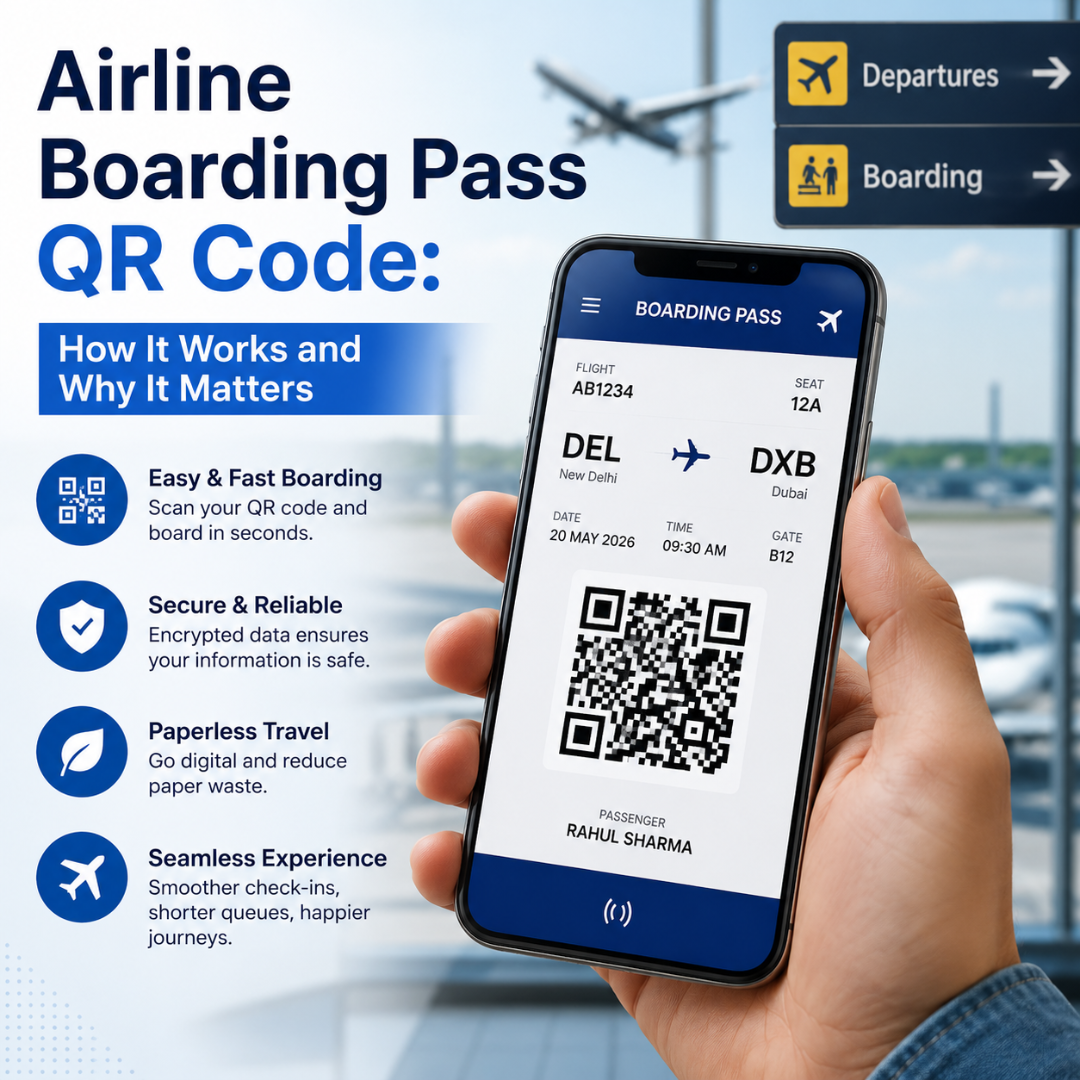
You pull out your phone at the gate, tap to open your boarding pass, and hold the screen up to the scanner. A beep. A green light. You walk through. The whole thing takes less than three seconds. But what just happened? Your airline boarding pass QR code just verified your identity, confirmed your seat, updated the flight manifest, and let the system know you've boarded — all in one scan. Here's how it all works.
What Is an Airline Boarding Pass QR Code?
An airline boarding pass QR code is a two-dimensional code printed or displayed on a boarding pass that stores key flight data in a machine-readable format. A single scan gives airport systems instant access to everything they need.
A standard boarding pass QR code contains:
• Passenger name
• Flight number and date
• Departure time and gate number
• Seat assignment
• Passenger Name Record (PNR) locator
The aviation industry uses a global standard called BCBP — Bar Coded Boarding Pass — developed by the International Air Transport Association (IATA). This ensures boarding pass QR codes can be read consistently across all airlines and airports worldwide, supporting smooth multi-carrier journeys.
Business and Operational Benefits of Airline QR Codes
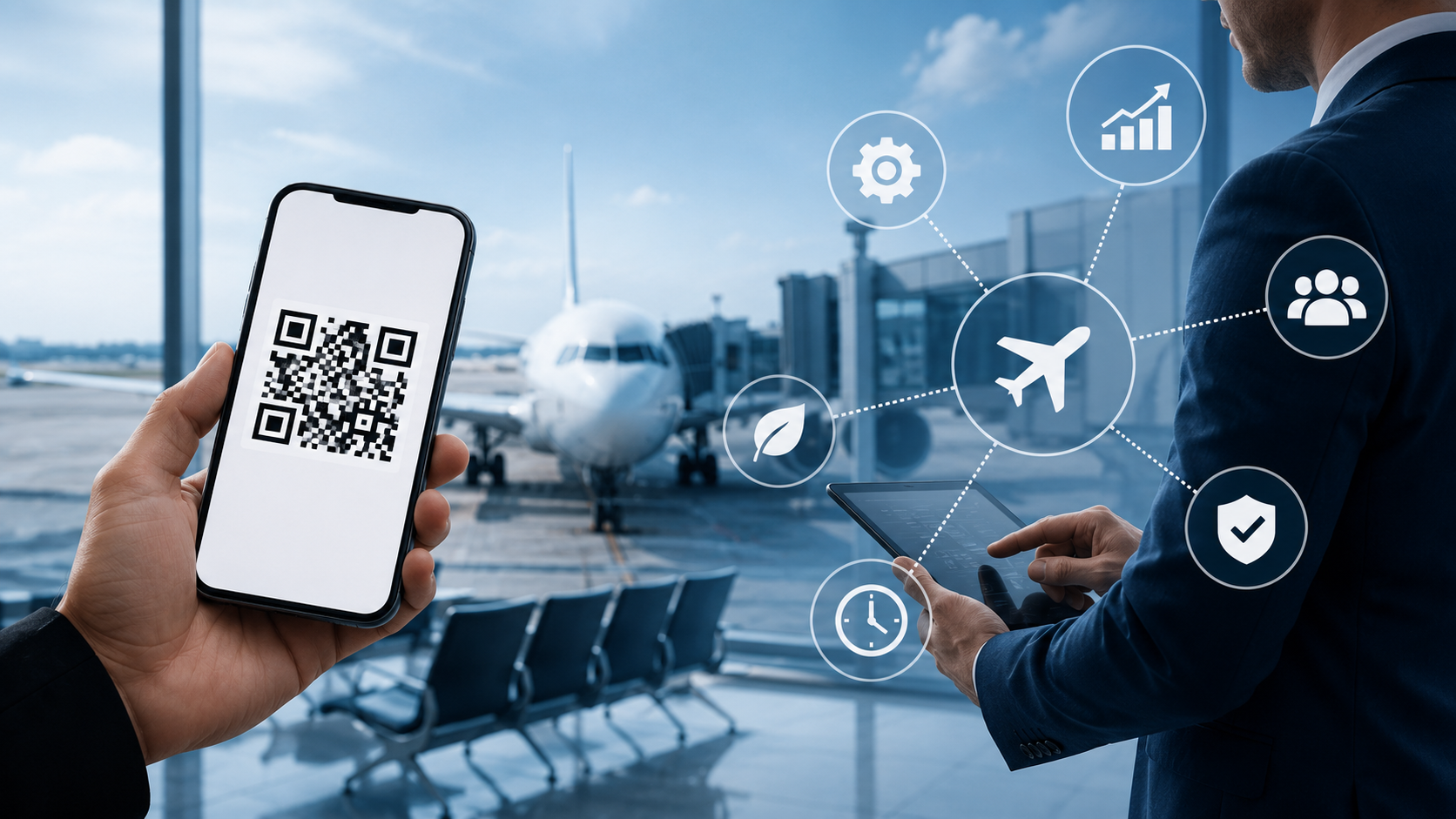
Faster Boarding, Fewer Delays
QR code scanning processes each passenger in seconds. Compare that to manual document checks, which require agents to visually inspect and match paper tickets. Faster processing means shorter gate queues and on-time departures.
Fewer Staffed Check-In Desks
Mobile boarding passes reduce the number of passengers who need to visit a staffed counter. Airlines can operate with fewer open desks during peak hours. Alaska Airlines, for example, removed check-in desks at major hubs in favor of mobile boarding passes, allowing passengers to scan at a self-service station and leave luggage at automated drop-off points.
Real-Time Flight Updates
Airlines can push updated flight information — gate changes, delays, boarding time revisions — directly to the mobile boarding pass. Passengers don't need to visit a counter or watch departure boards. This also reduces passenger-initiated queries to gate agents during disruptions.
Lower Paper Waste
Across billions of annual flights, reducing paper boarding passes, baggage receipts, and printed itineraries contributes directly to sustainability goals. United Airlines and Lufthansa have both published targets to reduce single-use paper in ground operations.
How a QR Code Boarding Pass Works: Step-by-Step
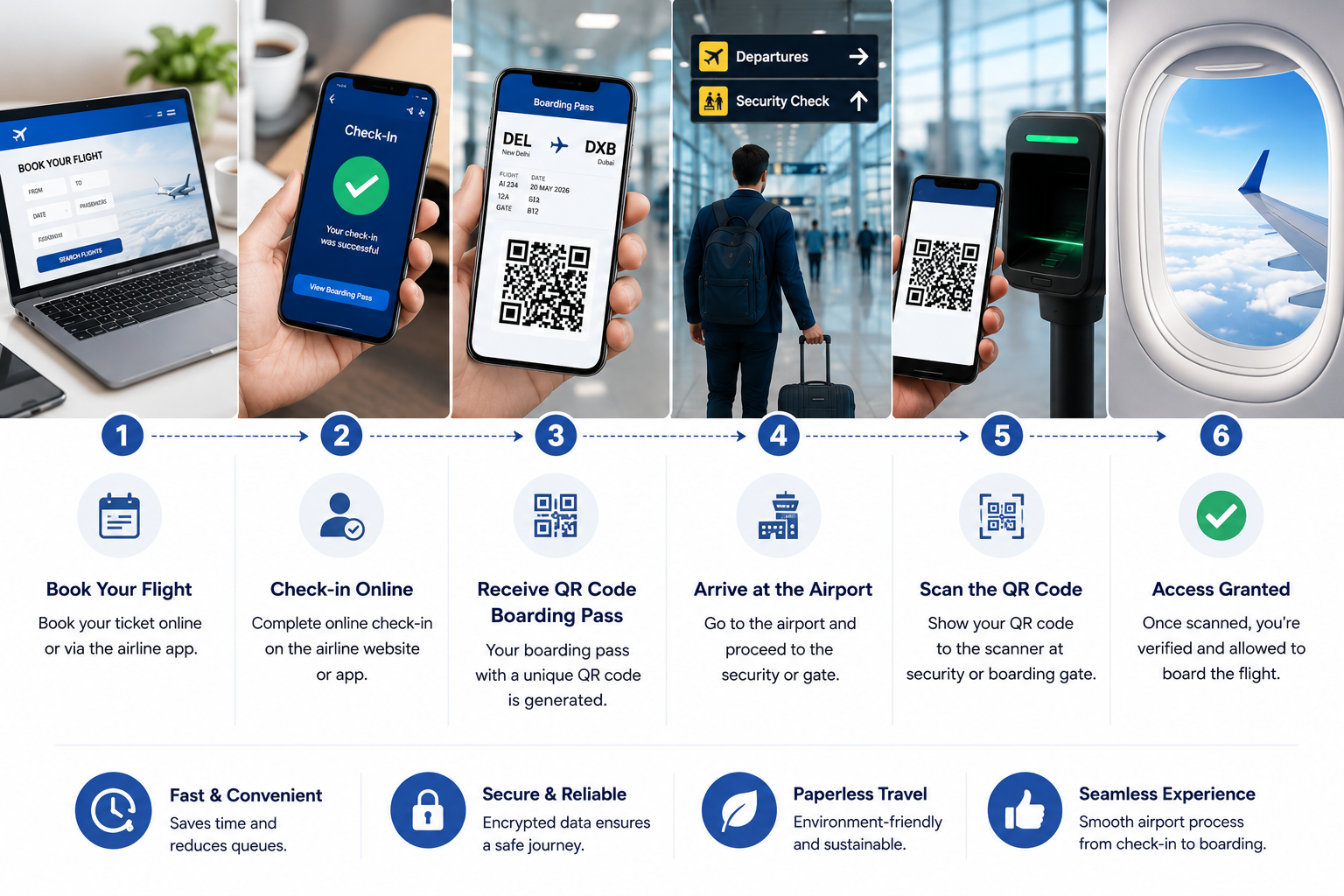
Step | What Happens | Who's Involved |
Check-in | System generates a unique QR code encoding all passenger and flight data | Airline reservation system |
Delivery | Boarding pass sent via email, SMS, or airline app; stored in Apple/Google Wallet | Passenger's device |
Security | Scanner reads QR code and verifies data against the airline database | Airport security system |
Bag Drop | Kiosk scans QR code to pull up booking and print baggage tag | Self-service kiosk |
Boarding Gate | Final scan confirms identity, seat, and flight; marks passenger as boarded | Gate scanner + manifest |
Every time the QR code is scanned, it verifies data against the airline's live system. This keeps the process accurate and the flight manifest up to date in real time.
Where Airlines Use QR Codes Beyond Boarding
Baggage Tags
Every checked bag carries a QR-coded tag that ground crew scans at each handling stage — from check-in belt to aircraft hold to destination carousel. Each scan creates a timestamped checkpoint. When a bag goes missing, staff can identify exactly where it was last scanned. The industry has seen a 9.2% year-on-year drop in mishandled baggage rates as digital tracking improved.
Airport Navigation
QR codes on terminal maps and gate signage give passengers instant access to live navigation tools — without a separate app download. Especially useful in large international airports on tight layovers.
In-Flight Services
Passengers scan seatback QR codes to connect their phones to the plane's entertainment system, browse menus, or access Wi-Fi. Qatar Airways offers a 'Zero-Touch' system where passengers turn their personal phone into a remote for the screen in front of them via a QR scan.
Lounge and Loyalty Access
At airport lounges, QR codes verify loyalty program membership, record the visit, and add bonus miles to the account — without staff looking up anything manually.
Ground Operations and Maintenance
Access badges with embedded QR codes control entry to restricted airside zones. Maintenance teams scan QR codes on aircraft parts to retrieve service history and inspection records. Bridgestone Aircraft Tire allows technicians to scan a QR code printed directly on aircraft tires to pull up full maintenance history and log inspections on the spot.
Best Practices for Using Boarding Pass QR Codes
• Save your boarding pass to Apple Wallet or Google Wallet — more reliable than a screenshot.
• Never post a photo of your boarding pass online — the PNR can be used to access your full booking.
• Check specific airline requirements for international flights — some routes require counter verification.
• If the code won't scan, approach a gate agent immediately rather than attempting multiple rescans.
Common Mistakes Travelers Make
• Taking a screenshot with poor screen brightness — the scanner can't read a dim or pixelated code.
• Sharing boarding pass photos on social media — this exposes your PNR and personal booking data.
• Assuming all airports accept digital passes — always check before an international departure.
• Not updating the mobile app before travel — outdated apps sometimes display malformed codes.
Conclusion
The airline boarding pass QR code is one of the most quietly powerful pieces of technology in modern travel. It handles check-in, security, bag drop, lounge access, and boarding — all from one small pattern on your phone screen. For airlines, it cuts costs and speeds up operations. For passengers, it makes travel smoother and less stressful.
Planning your next trip? Make sure you save your boarding pass to your mobile wallet before you head to the airport — one less thing to worry about at the gate.