Fundraising has a timing problem. Someone hears a story at an event and means to donate, but by the time they are home the moment has passed. A poster on a wall makes a clear case and then asks the reader to remember a web address. A collection box works only for people carrying cash, which is fewer people every year.
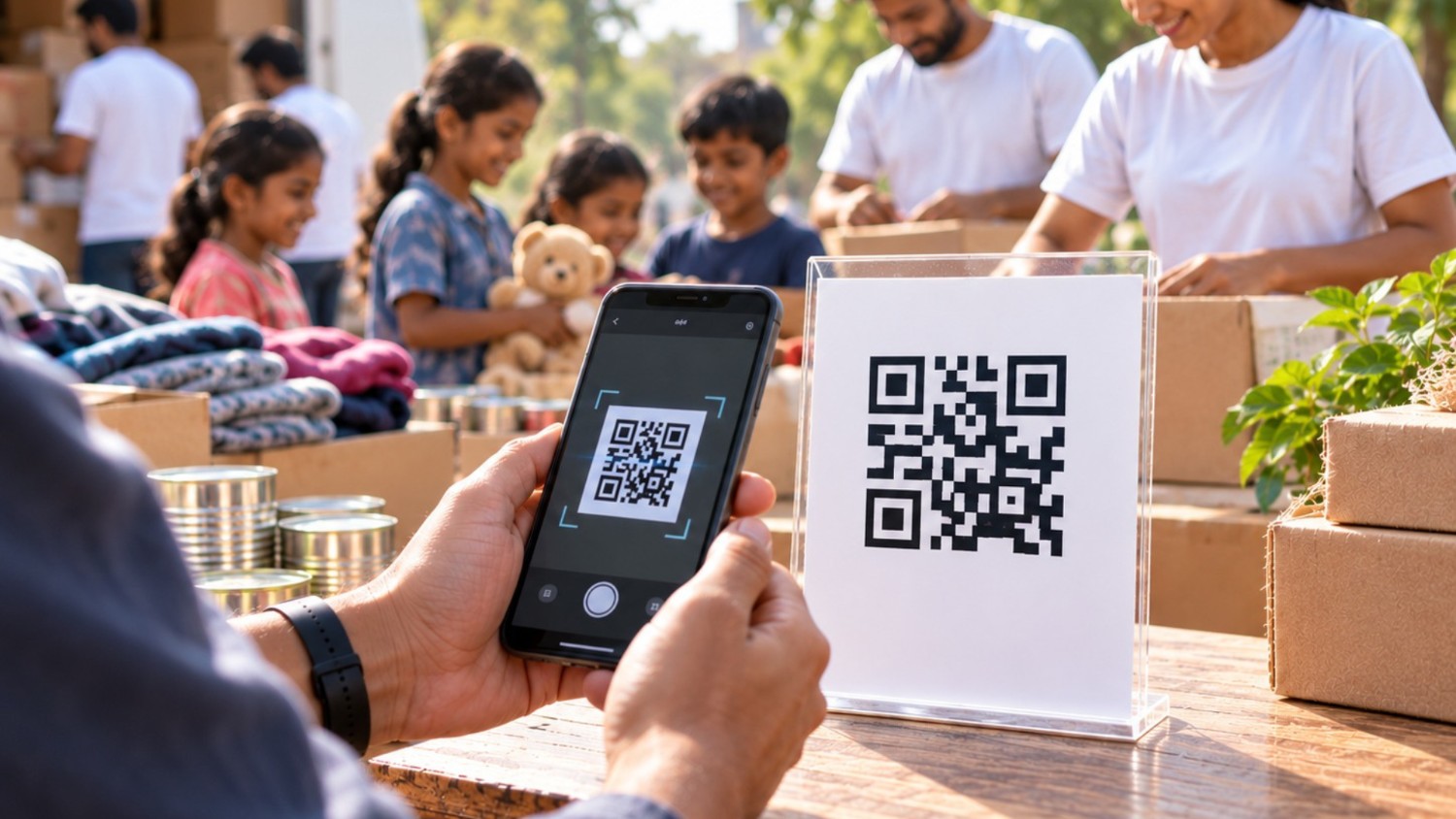
A QR code closes that gap. The supporter scans while they are still standing in front of the appeal, and the donation happens in the same minute as the decision. For most organisations this is the single biggest change - not more donors, but far fewer donors who intended to give and never did.
The reprinting problem matters more for NGOs than for most businesses, because print budgets are small and campaigns change often. Since the code points to a page rather than to fixed content, a banner printed for a flood appeal can be pointed at a winter relief drive by updating the linked page. The banner keeps earning instead of going into storage.
Trust is the other half of the story. Donors increasingly want to see where the money goes before they give. A code on your report, your field photos or a two-minute video answers that question better than a paragraph on a leaflet, and CSR teams reviewing your organisation can reach your registration details and audited accounts in one scan.
Volunteers are recruited the same way. A form that used to be a clipboard at a stall becomes a code on a badge, and the details arrive typed, complete and already in a spreadsheet. Small teams get back the hours they used to spend copying names from paper.
Whether you run a registered trust, a small community group, a faith organisation, an animal shelter or a disaster response team, a QR code gives you one flexible way to connect a person who cares to the action you want them to take.