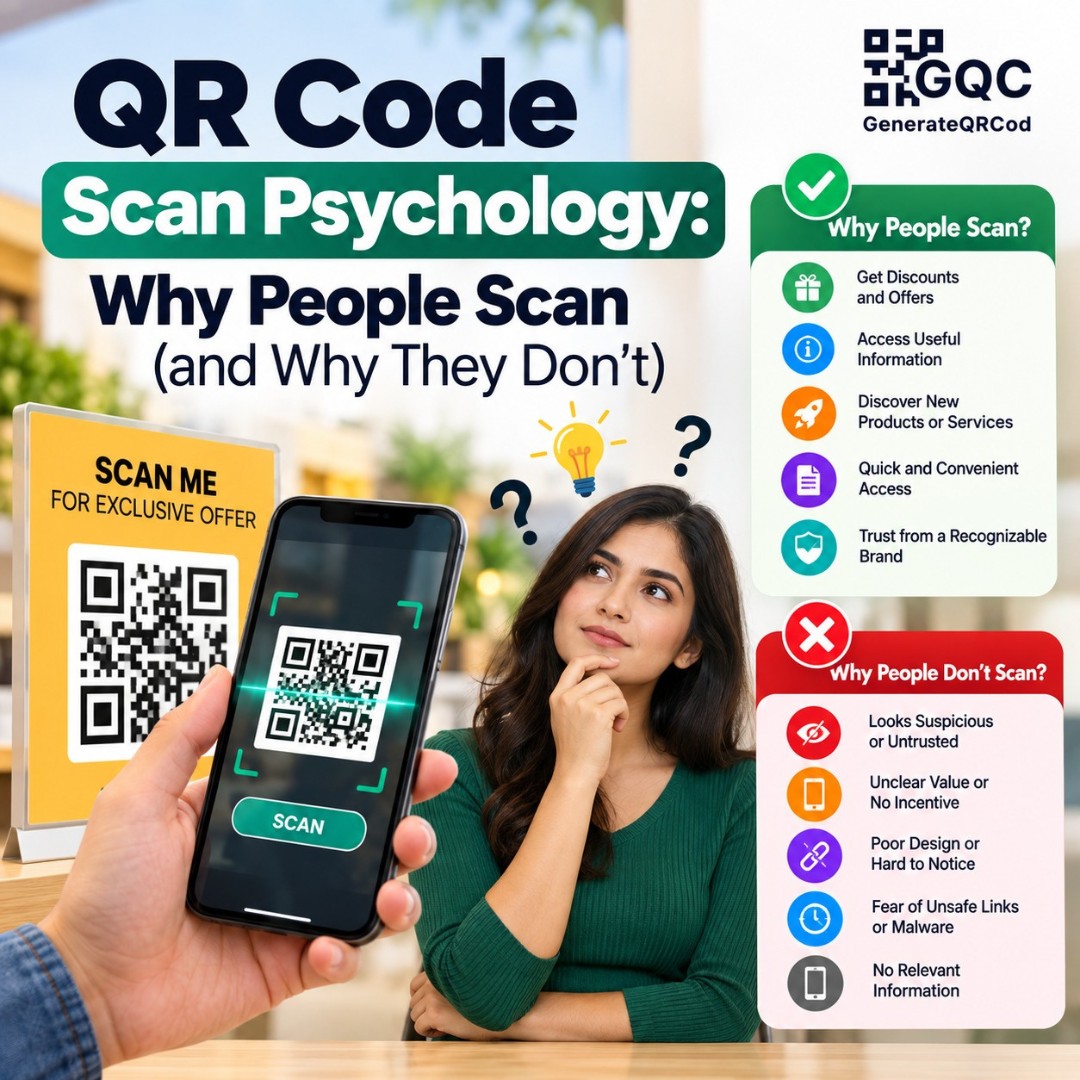
Two coffee shops on the same street put QR codes on their counters. The first one just prints a black square. The second prints the same kind of code with one line above it: "Scan for a free cookie on your next visit."
Guess which one gets scanned all day.
The code wasn't better. The reason to scan was. That's QR code scan psychology in one small example.
People don't scan because a QR code exists. They scan because, in that second, the reward feels bigger than the effort and the risk. This guide breaks down what goes on in a person's head before they lift their phone, and how you can use it to get more scans.
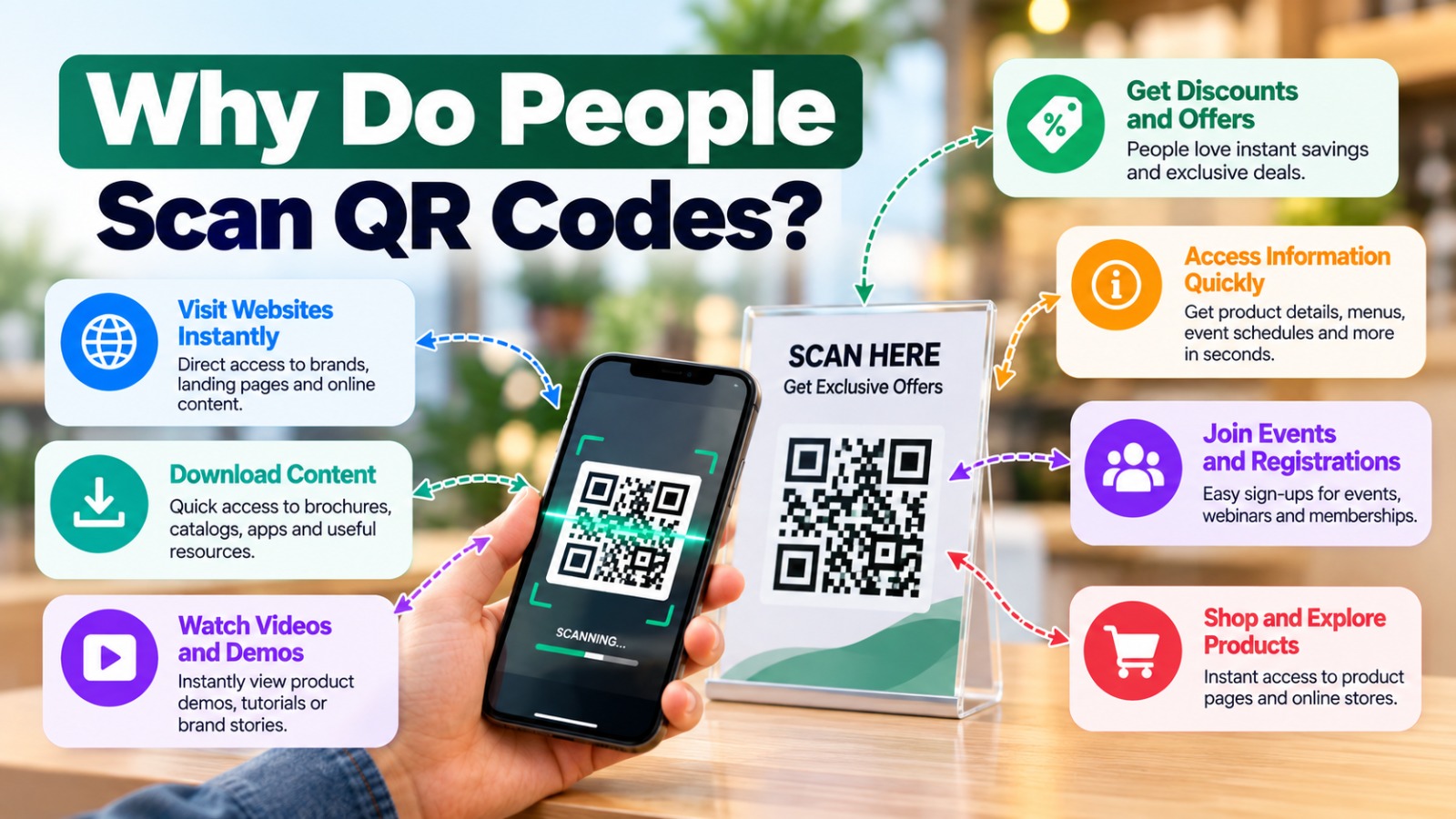
Why Do People Scan QR Codes?
People scan a QR code when three things line up: they clearly understand what they'll get, scanning feels quick and easy in that moment, and they trust the code is safe. If any one of these is missing, most people walk past, even if they're mildly curious.
Let's look at each one, plus a few smaller triggers.
1. A Clear Reason Beats Curiosity
Some marketers think a mystery code makes people curious. Sometimes it does. But most people are busy, and a plain code with no explanation feels like homework.
The fix is simple. Tell people exactly what happens after the scan. "Scan to see today's menu." "Scan for 10% off." "Scan to join WiFi." A short, specific promise turns a maybe into a yes.
And be honest with that promise, because the next part matters just as much.
2. Effort Has to Feel Tiny
Every scan asks for small actions. Take out the phone, open the camera, hold it steady, wait for a page to load. If any step feels hard, people give up.
So think about the moment. Can they stand still here? Is the code at eye level? Is there mobile signal? A code on a moving bus or high up on a building fights human behavior. A code on a restaurant table, a waiting room wall, or a checkout counter works with it, because people are already standing or sitting still.
Size plays a role too. If someone has to walk closer or zoom in, many won't. Our QR code best practices guide has a simple size chart.
3. Trust Decides the Final Second
People have heard about QR code scams, where fake codes are stuck over real ones in parking lots or on posters. So a small voice asks, "Is this safe?"
You can quiet that voice. Put your logo in the center of the code, so it clearly belongs to your brand. Print your website address in small text below it, so people know where they're going. Use a secure https page. And if your codes are in public places, check them now and then to make sure nobody has pasted a fake sticker on top.
A branded code simply feels safer than an anonymous one.
4. Waiting Moments Are Scanning Moments
People scan more when they have a few idle seconds. Think of queues, waiting rooms, tables before food arrives, a bus stop, or a trade show booth while someone waits to talk to you.
This is why table menus caught on so fast. The customer is sitting, waiting, and already holding their phone. Low effort, right moment.
Place your codes where people naturally pause, not where they rush.
5. The Code Should Look Like It Belongs
A QR code slapped on a design as an afterthought gets ignored. A code that looks planned gets noticed.
Put it inside a simple frame, add an arrow or a small phone icon, and use colors that match your brand while keeping strong contrast. These visual cues tell the brain "this is here for you, act on it." You can add your logo and brand colors for free on GenerateQRCod and see the result in a live preview.
6. Small Rewards Work Better Than Big Promises
A small, instant reward often beats a big, vague one. "Scan to win a car" can feel too good to be true. "Scan for a free drink today" feels real and immediate.
Instant value also builds a habit. When a customer scans once and gets something useful, they're more likely to scan your next code too.
7. Social Habit Helps
When people see others scanning, they copy. Menus, payments, and event check-ins have made scanning feel normal for most age groups. You can gently use this by saying things like "Most guests order faster by scanning" near the code. Keep it believable, though.
8. The Page After the Scan Protects Future Scans
Here's a part people forget. The psychology doesn't end at the scan.
If the code promised a menu and opens a slow homepage, the customer feels tricked. They won't scan your next code. If it opens the menu in two seconds, they trust you a bit more. So make sure the page matches the promise, loads fast on mobile data, and doesn't ask for sign-ups before showing value.
What Makes People Skip a QR Code?
Reason people skip | Easy fix |
No idea what they'll get | Add a short, specific call to action |
Code too small or too far | Size it for the real scanning distance |
Feels unsafe | Add your logo and show your website address |
Wrong moment or place | Place codes where people pause |
Slow or unrelated page | Link to a fast mobile page that matches the promise |
Blends into the design | Use a frame, arrow, and good contrast |
Test What Works for Your Audience
What works for a cafe may not work for a clinic. So test.
Try two versions of the same poster with different calls to action, like "Scan for menu" and "Scan for today's special." Link each code to a slightly different page address, then compare which one gets more visits. Our guide on running multiple QR code campaigns shows how to track this for free.
Final Thoughts
QR code scan psychology is really about respect for people's time and trust. Give them a clear reason, make scanning easy, prove the code is yours, and deliver on the promise. Do that, and your codes stop being ignored squares. Create a branded QR code with your logo on GenerateQRCod, and see our QR code examples for ideas.